Welcome to our free one-day workshop for celebrating women studying and working in computing! Alice & Eve aims to bring together talents in the field of computing. The seventh edition of this workshop will be hosted on 20 October 2026 by Utrecht University.
Alice and Eve event is inspired by the BCS Lovelace Colloquium that started in 2008. For more details about earlier editions of Alice & Eve, see the websites of 2020, 2021, 2022 , 2023, 2024, and 2025.
The event is held during a single day, and features:
Join us, and participate in our poster contest on the topic of your choice!
Alice & Eve will take place on October 20, 2026.
The workshop will be held at Neude11 Utrecht Public Library in Utrecht.
Register here: Alice & Eve 2026 Registration Form
Please note the registration deadline is 11 October, so we can accurately plan catering.
| Time | Session |
|---|---|
| 09:30 – 10:00 | Registration and Coffee |
| 10:00 – 10:10 | Opening |
| 10:10 – 10:40 | Keynote talk by Laura Hollink on Bias in Knowledge Graphs:
Knowledge graphs are structured representations of real-world entities and their relationships, forming the backbone of a wide range of applications — from powering search interfaces and recommendation systems to serving as training data for large language models. Yet despite their growing influence, bias in knowledge graphs remains a largely overlooked problem compared to the broader discourse on bias in AI. Bias enters knowledge graphs inevitably: they are constructed by humans, or derived from human-generated data, and thus inherit the skewed perspectives, gaps, and prejudices embedded in their sources. This talk offers a structured overview of bias in knowledge graphs across two dimensions: quantitative and qualitative. Quantitative bias concerns disparities in representation, such as unequal numbers of nodes or edges associated with different groups of people. Such imbalances carry real consequences: downstream applications like recommender systems and entity alignment tasks have been shown to systematically favor entities with richer data, amplifying existing inequalities. Qualitative bias manifests in the language used to describe people and cultures within a graph's literal values. Drawing on domain expertise from the cultural heritage sector, where questions of inclusion and fair representation have received sustained attention, we demonstrate how biased terminology can be identified in knowledge graph literals. The talk closes with an overview of mitigation efforts by knowledge graph creators, offering both practical tools and a call to action for the field. |
| 10:40 – 11:10 | Keynote talk by Pınar Yolum on Human–AI Collaboration Beyond Prediction:
As humans increasingly collaborate with AI agents, effective collaboration depends on combining complementary strengths rather than replacing human judgment. Effective collaboration requires AI systems to model and adapt to human preferences, social norms, values, and context, and to exhibit capabilities such as empathy, self-reflection, and social awareness in ways that support interaction. This raises fundamental questions: how should we represent these capabilities computationally, how can they be learned from data and interaction, and how should they be evaluated? Privacy provides a particularly rich domain for exploring these challenges. I will present our work on privacy assistants that reason about norms, contexts, and values to help people make informed decisions in complex data-sharing environments. |
| 11:10 – 11:30 | ☕ Coffee Break |
| 11:30 – 12:00 | Keynote talk by Vanessa Evers on Deploying Physical AI in Society:
In futurist research, we envision new (Physical) AI possibilities and think through the consequences of these (im)possible innovations for people and their impact on society. In imagining a future symbiotic society with robots and people and in developing Social AI and Social robotics solutions, we have been imagining what future physical AI services may look like, how to innovate technologically to make the solution come true and study the social and societal consequences. In this presentation I will discuss projects in which we created robotic technology; explain how we went about designing integrated AI driven robots that were envisioned to operate in everyday environments and how we studied the impact of these controversial technologies on people’s lives. Also, there will be a lot of interesting videos to watch as we learned to make robots for people through trial and error. |
| 12:00 – 12:30 | Keynote talk by Maria Vlasiou on Stochastic Processes on Interacting Networks:
Many systems in science and engineering can be viewed as collections of stochastic processes that interact through dynamic networks. Classical approaches typically assume fixed structures or independent components, but contemporary systems—ranging from communication platforms and service ecosystems to mobility networks and biological systems—evolve while operating. Their behaviour emerges from feedback between random flows, changing topologies, and state dependent interactions. This lecture surveys recent developments in stochastic processes on interacting networks. I will discuss models that capture how randomness, dependence, and network evolution shape collective dynamics, highlighting tractable results on stability, scaling limits, and approximation methods. |
| 12:30 – 13:45 | 🍽 Lunch Break & Exhibition |
| 13:45 – 14:30 | Sponsor Lightning Talks Nantia Markynioti from DuckDB Labs on "DuckDB: From academic research to AWS" Anna Hu from AFAS on "My journey from Graduation to the AI Team at AFAS Software" Garazi Muguruza Lasa from SURF on "Quantum technologies at SURF" Lynda Hardman from CWI on "Why would I want to study Computer Science?" |
| 14:30 – 15:00 | Keynote talk by Özlem Durmaz Incel on Pervasive Sensing Systems at the Edge:
Pervasive systems consist of networks of sensing, computing, and reasoning components embedded so seamlessly into their environment that they become unnoticed. These form a kind of digital skin, allowing us to perceive the world through numerous small, imperfect, interconnected devices. In this talk, I will outline the research conducted by the Pervasive Systems group at the University of Twente, using examples such as earbuds capable of detecting distraction or recognizing silent speech, bicycles transformed into mobile edge nodes for safer cycling, and sensor networks deployed in the field for biodiversity monitoring. Common challenges across these projects include scaling sensing efforts, running intelligent processing on low-power devices, and building reliable systems from unreliable components. |
| 15:00 – 15:30 | ☕ Coffee Break |
| 15:30 – 16:00 | Keynote talk by Christine Utz on Apps, AI, and Your Data: How Much Do We Really Know?:
AI is no longer confined to chatbots and AI-native applications but increasingly embedded in the everyday apps we use, from online shops to video players. But how transparent are companies about these capabilities and the role our data play in developing AI? In this talk, I'll share findings from a current study of how popular apps communicate their use of AI and AI-related data practices, what choices they give users, and how easy those choices are to find and exercise. We'll also look at the role of deceptive design and what it can mean for privacy, transparency, and user control. The talk presents some of the different approaches apps take - and some of the unexpected ways AI-related data practices are communicated to users. |
| 16:00 – 16:15 | Poster Awards |
| 16:15 – 17:00 | Panel on “Resilience in Computing” |
| 17:00 – 17:10 | Closing |
| 17:10 – 18:00 | 🥂 Drinks |
We are thrilled to announce the Alice & Eve 2026 poster contest with exciting prizes awaiting the winners!
We invite women and other people of marginalized genders who are Bachelor’s, Master’s, or PhD students, or early-career researchers to submit a poster. Your poster can be on any computing topic you like: from social networking to quantum computing and from medical image processing to formal verification. If it involves computers, we are interested. The preferred poster language is English. We welcome you to reuse any existing/published work or poster, no need to print it again.
To enter the poster contest, please write a half-page abstract (word limit: 250 words) on the topic of your poster and submit it by 15 September 2026 via EasyChair: https://easychair.org/conferences/?conf=aliceeve2026
Notifications will be sent out by 25 September 2026. Selected participants are expected to bring the poster (up to size A0 portrait or A1 landscape) described by their abstract with them to Utrecht to present during the poster session. At the end of the day, prizes will be awarded for the winning posters in each category.
If you have any questions, don’t hesitate to get in touch: alice.eve@uu.nl. We look forward to seeing you in Utrecht!
In addition to the keynote talks and poster sessions, a dedicated exhibition will run throughout the event, featuring thirty women in computing and highlighting their most important contributions. Learn more here.
Some highlights of the exhibition:
More information can be found at the exhibition booklet.
Fantastic coding games and media - which include videos and podcasts related to women in computing - are also offered.
We have invited inspiring women working on the cutting edge of computing to give a keynote on their research topic. Confirmed keynote speakers include:
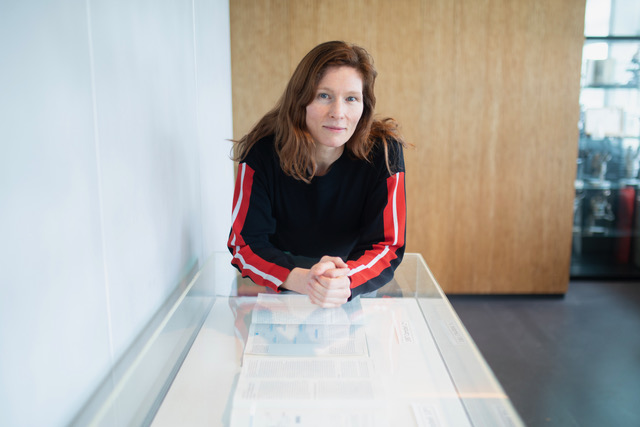
Professor of Responsible AI in Culture & Media at Utrecht University, researcher and management team member at CWI
Laura Hollink is Professor of 'Responsible AI in Culture & Media' at Utrecht University. She is also a researcher and member of the management team at CWI, the Dutch national research centre for Mathematics and Computer Science. She investigates bias, diversity and inclusivity in AI systems that are used in the culture and media sectors, such as recommender systems, LLMs and knowledge graphs. To ensure societal relevance of her work, she maintains close, long-term collaborations with societal partners in two interdisciplinary labs: she is co-director of the Cultural AI Lab, and co-applicant of the NWA funded ELSA Lab on AI, Media and Democracy.
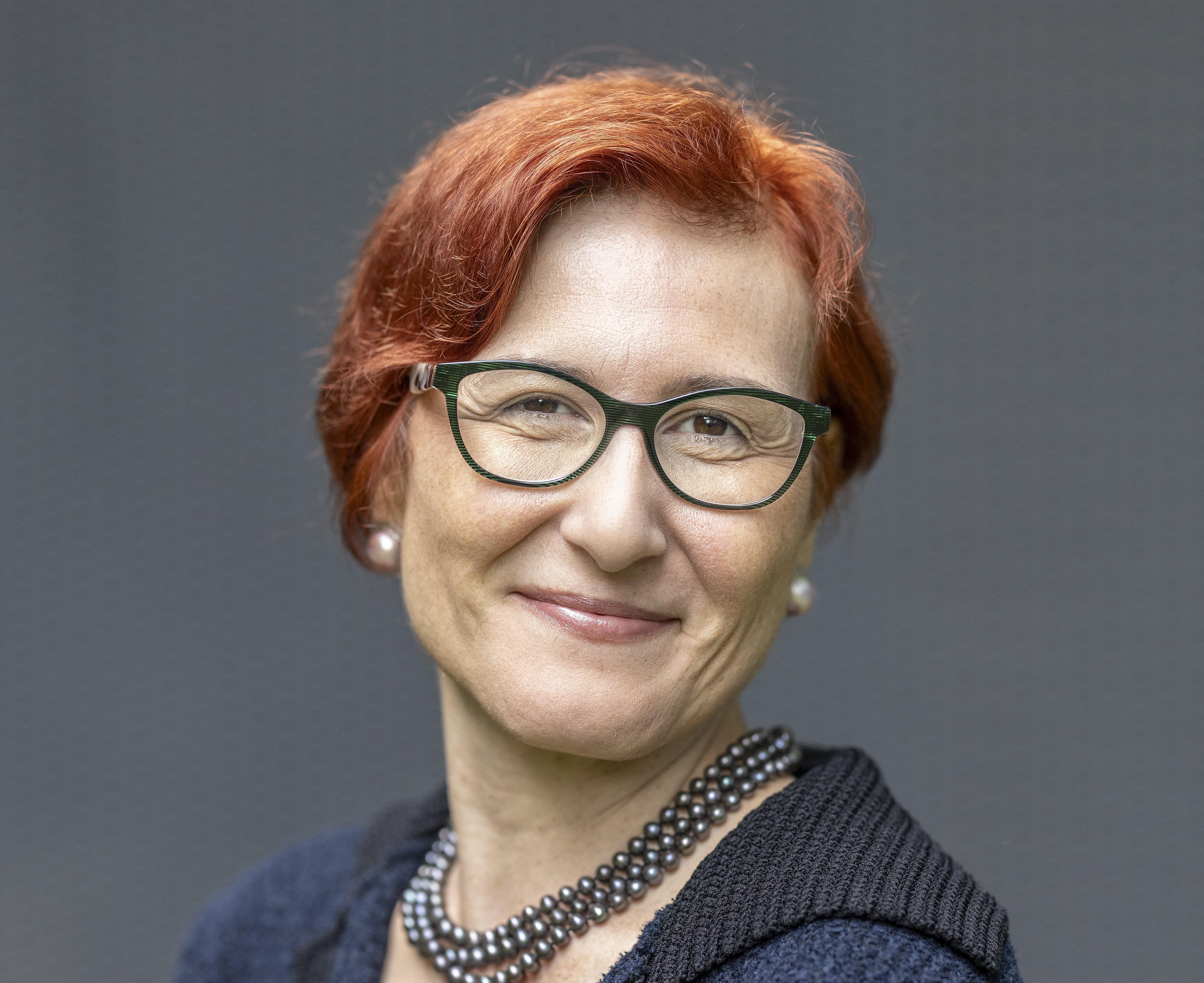
Professor of Trustworthy AI at Utrecht University
Pınar Yolum is Professor of Trustworthy AI at Utrecht University, where she leads the Responsible AI research group within the Department of Information and Computing Sciences. Her recent research focuses on human–AI collaboration, with an emphasis on trust, autonomy, and privacy. Pınar serves on the Editorial Boards of Journal of AI Research, Journal of Autonomous Agents and Multiagent Systems, and IEEE Internet Computing. She is the program leader of the AI Master’s program at Utrecht University, co-founder of the Global Justice Investigations Lab, and an active member of the Hybrid Intelligence Center. She regularly contributes to activities to promote women participation in computer science. She is an enthusiastic reader and a restless skier.
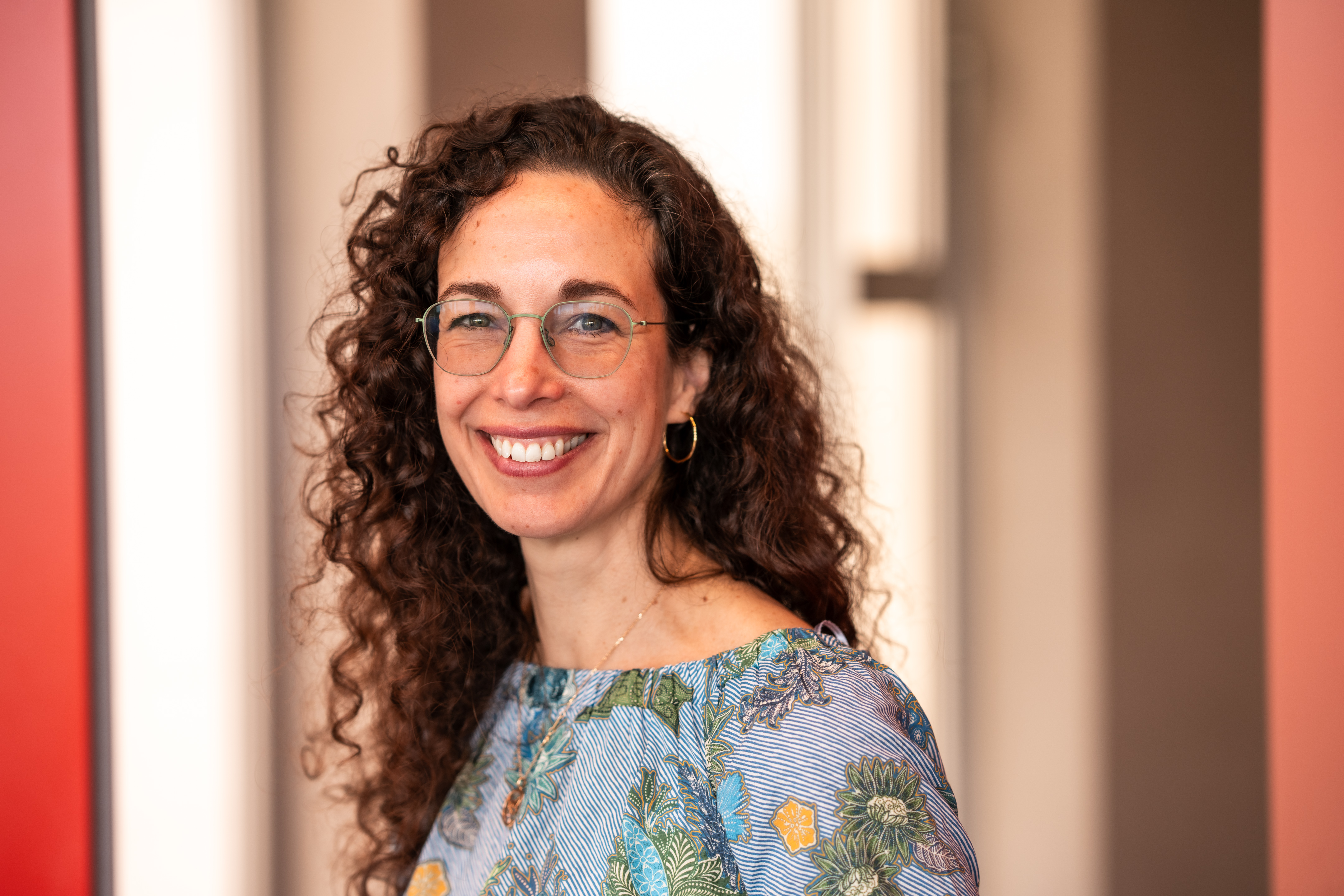
Director at CWI, Chief Science Advisor at the Ministry of Education, Science and Culture (OCW), Full professor and Chair of Human Media Interaction at University of Twente
Vanessa Evers is the director of CWI, the National Institute of Mathematics and Computer Science in the Netherlands. She is also Chief Science Advisor for the Ministry of Education, Science and Culture (OCW) of the Dutch government. Apart from that, she is a full professor and Chair of Human Media Interaction at the computer science department of the University of Twente in the Netherlands. She is also founder and scientific director of the DesignLab at the University of Twente. Vanessa Evers is a visiting professor of Computer Science at Nanyang technological University in Singapore and was the founding Director of the Institute for Science and Technology for Humanity (2019-2022). Finally, she is a member of the supervisory board of Radboud University in the Netherlands. She is Co-chair of the World Economic Forum's Global Future Council on Physical AI and Autonomous Systems and in the Advisory Board of the WASP-HS Wallenburg foundation, and the Global Learning Council. Her research interests focus on Social Artificial Intelligence and Robotics; the societal impact of AI, autonomous systems and robots; human-robot collaboration as well as cross-cultural aspects of Human Machine Interaction. Vanessa has taught courses on Human Computer Interaction, Computer Mediated Communication, Technology and Teamwork, and Social Robotics at the undergraduate and graduate level, she also taught executive training courses, developed online courses and courses for continuing education.
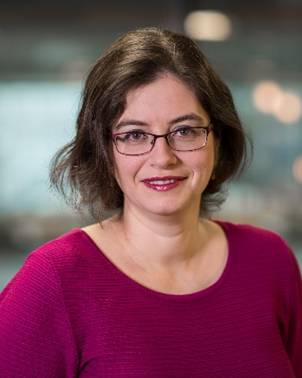
Full Professor at the University of Twente, Research Fellow of the European research institute EURANDOM, Director of the Dutch Network on the Mathematics of Operations research, LNMB
Maria Vlasiou's research centres on the performance of stochastic processing interacting networks. She develops mathematical tools in performance evaluation, optimisation, control, and decision making and applies these tools to design new algorithms that can be deployed in data centres, the electricity grid, communication systems, high-tech manufacturing and beyond. Prof. Vlasiou has received the best paper award in ICORES 2013, the Marcel Neuts student paper award in MAM8, the 3rd prize of the 8th conference in Actuarial Science, the 2022 the UPS George D. Smith prize of INFORMS, and the Hypatia chair of the University of Twente. She currently serves as an Associate Editor for IISE Transactions, Mathematical Methods of Operations Research, OR Spectrum, and INFOR.
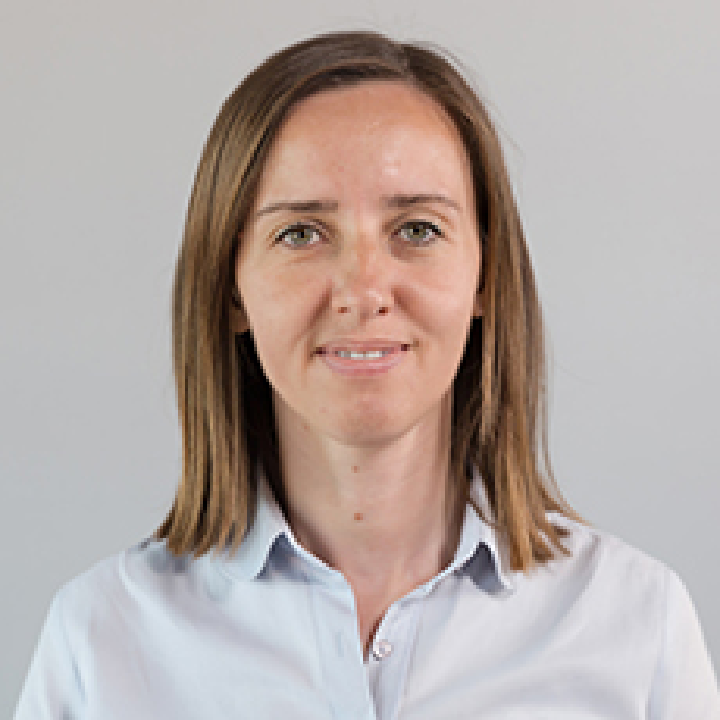
Senior Associate Professor and Chair of the Pervasive Systems research group at the University of Twente
Özlem Durmaz Incel is a Senior Associate Professor and Chair of the Pervasive Systems research group at the University of Twente, where she leads a team of over thirty researchers working across the end-to-end IoT stack. She obtained her PhD in Computer Science at the University of Twente. Before returning to Twente, she was a faculty member at Galatasaray University and then at Boğaziçi University in Istanbul. With more than fifteen years of experience as a systems builder, her research bridges physical sensing and intelligent action: resource-efficient sensing, Edge AI, and multimodal sensing, spanning from highly constrained earables to large-scale environmental networks. Her interests include wearable computing, human activity and well-being recognition, behavioural biometrics, and the Internet of Things. She serves as Associate Editor for the Proceedings of the ACM on Interactive, Mobile, Wearable and Ubiquitous Technologies (PACM IMWUT) and on the editorial board of IEEE Internet Computing.
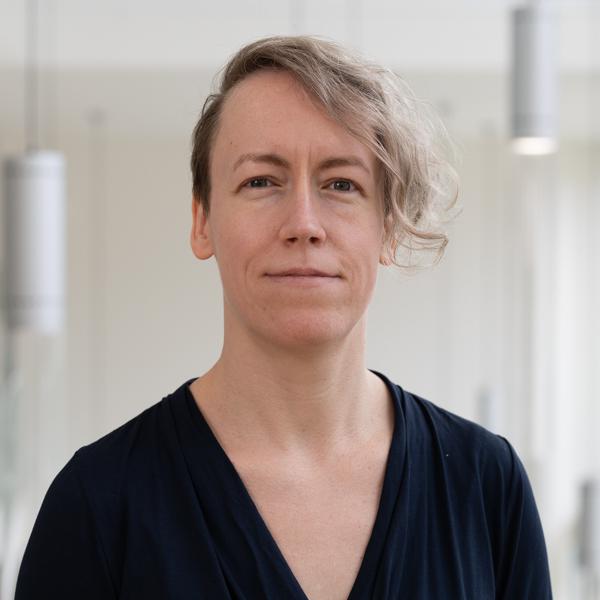
Assistant Professor in the Digital Security group at Radboud University
Christine Utz is an assistant professor in the Digital Security group at Radboud University. With a background in computer science and law, she conducts empirical research that studies privacy and digital rights from both technical and user-centered perspectives.




Alice and Eve is dedicated to providing a harassment-free conference experience for everyone, regardless of gender, gender identity and expression, sexual orientation, disability, physical appearance, body size, race, age or religion. We do not tolerate harassment of conference participants in any form. Conference participants violating these rules may be sanctioned or expelled from the conference at the discretion of the conference organizers. Harassment includes, but is not limited to:
Participants asked to stop any harassing behavior are expected to comply immediately. If someone makes you or anyone else feel unsafe or unwelcome, please report it as soon as possible by contacting us ether in person or via email.
This Code of Conduct was adapted from the Geek Feminism Wiki anti-harassment policy.
Interested in sponsoring Alice & Eve 2026? We’d love to hear from you — please contact our sponsor chair at s.s.kerkhove@uu.nl.
🥉 Bronze Sponsors



🥈 Silver Sponsors

🥇 Gold Sponsors








For any questions, feel free to reach out to us at alice.eve@uu.nl.
Utrecht is one of the Netherlands’ oldest and most vibrant cities, located right at the heart of the country. It is home to the iconic Dom Tower, medieval canal wharves, world-class museums, and three UNESCO World Heritage Sites. Utrecht Centraal station is the largest railway hub in the Netherlands — just 30 minutes from Amsterdam and 35–40 minutes from Schiphol Airport.
Although the Alice & Eve event is a one-day program, we warmly encourage you to consider extending your stay to enjoy the city, connect with fellow participants, and make the most of your visit in a relaxed and inspiring atmosphere.
Utrecht University offers discounts for students at Bunk Utrecht and Stayokay Hostel Utrecht Centrum, both within walking distance of the Alice & Eve venue. Please find the discount codes on this website.
For non‑student attendees, a range of nearby hotels is available for accommodation.